EN
EN
 العربية


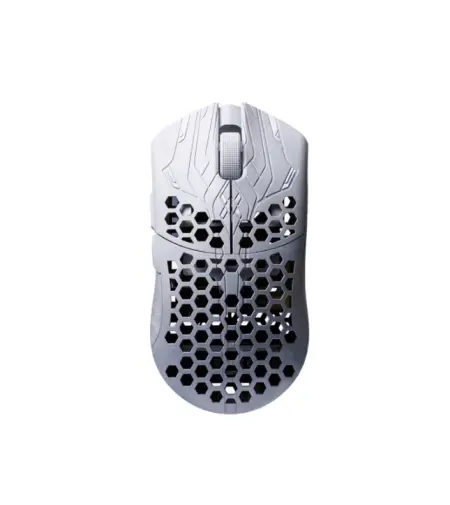
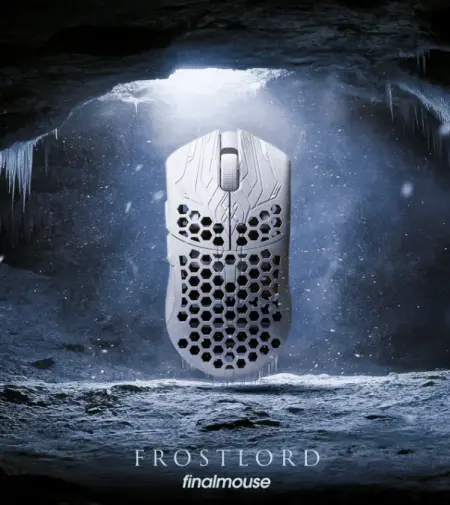

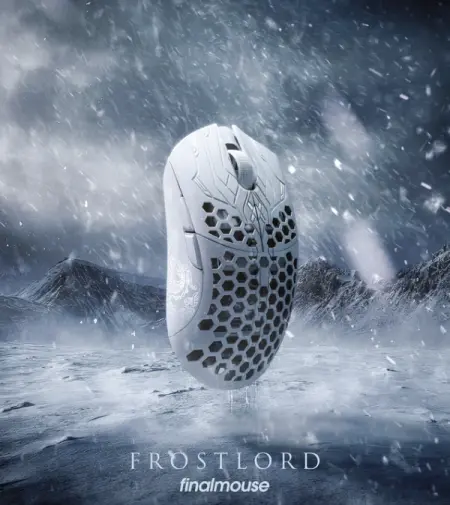
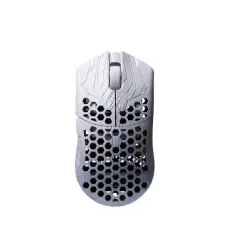
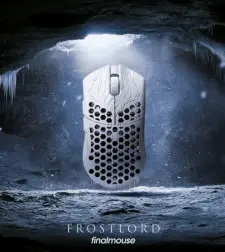

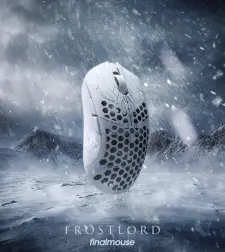
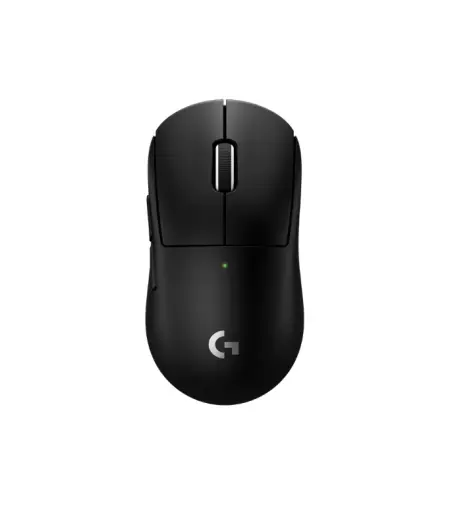
- The lightest, fastest, most responsive wireless gaming mouse in the world. Period. Presenting the UltralightX Frostlord. The last ULX. A limited edition final chapter of Finalmouse's Third Age.
The lightest, fastest, most responsive wireless gaming mouse in the world. Period.
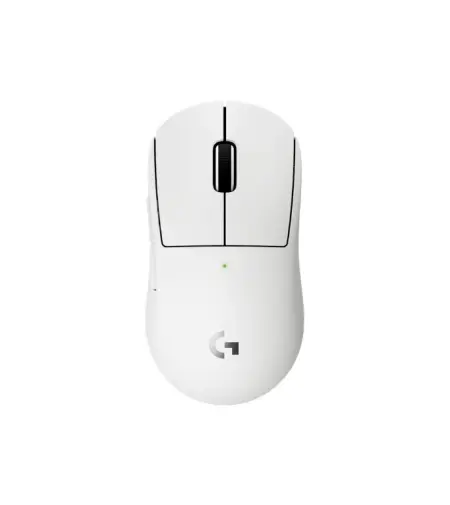
Presenting the UltralightX Frostlord. The last ULX. A limited edition final chapter of Finalmouse's Third Age.
At 33 grams, with cutting edge 8000Hz wireless tech capable of 344 microsecond click latency, and 444 microsecond motion latency... the Carbon Fiber Composite ULX Frostlord is the benchmark for performance eSports mice.
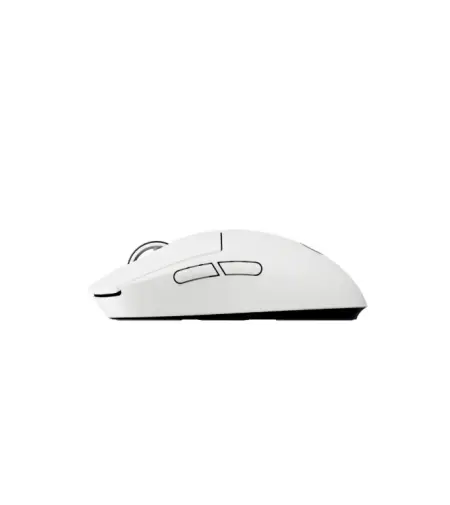
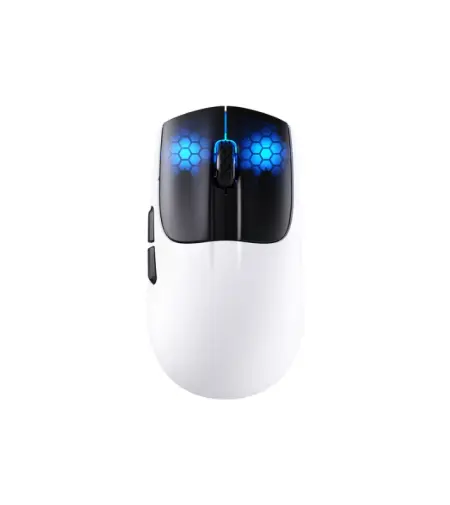
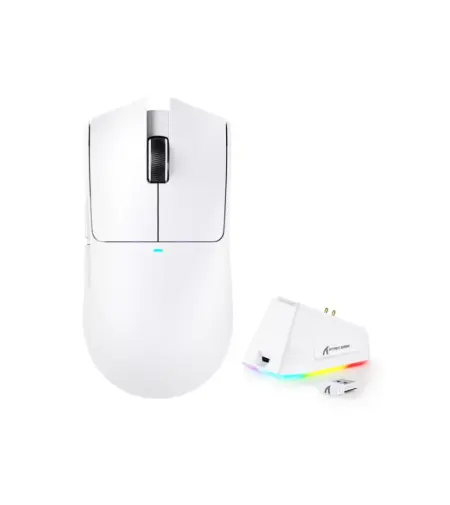
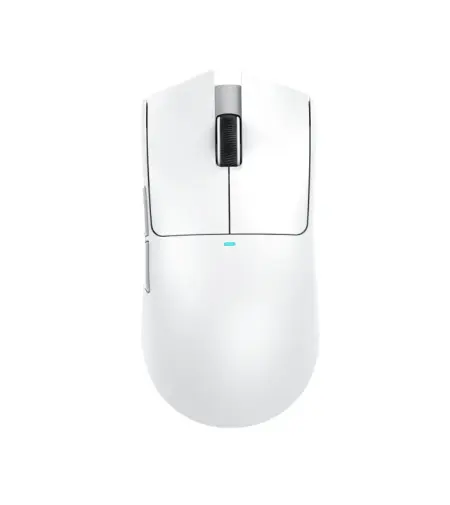
Specially formulated frost white color was developed exclusively for the ULX Frostlord. With the paint protected by our new ULX competition UV matte top coat. Providing excellent grip and durability.
The sides of the chassis features artwork applied in a new undercoat process developed for our 10th anniversary mice. A hand drawn Frostlord finished in a stunning glossy white on white coating commemorates the last of the ULX generation.
The UltralightX Frostlord is an engineering marvel 10 years in the making.
You've never felt anything like it before. At only 33 grams the ULX weighs less than the amount of sugar in a can of Coke. For another reference; that's less than the weight of 1 Strawberry.
Precision Engineered for a Competitive Advantage
The UltralightX Competition (ULX) is the lightest, fastest, most responsive wireless gaming mouse in the world. It is the physical embodiment of ten years of uncompromising engineering — designed to shatter the standards of esports performance.
At 33 grams, with cutting edge 8000Hz wireless tech capable of 344 microsecond click latency, and 444 microsecond motion latency... the Carbon Fiber Composite ULX Prophecy is the benchmark for performance mice.
The Lightweight Advantage - Physics in Your Favor
While some manufacturers perpetuate outdated dogmas about "ideal weight ranges," Finalmouse leans on first principles of physics. Newton's Second Law and SUVAT equations (used to model object motion) make clear that lighter mass equals faster response.
We modeled time-to-target for three mouse weights (35g ULX vs. 65g and 95g competitors) using the kinematic equation:
t = √(2s / a)
Under identical force, the ULX reached its target 16.7ms faster than the 65g mouse and 29.7ms faster than the 95g mouse over a 300mm swipe. These are not trivial deltas — they exceed network ping differences between coasts.
This latency reduction is physical, not electronic. Heavier mice require more effort, more grip pressure, and produce exponentially more fatigue during gameplay — all of which degrade aim performance over time.
Carbon Fiber Composite Chassis - Materials Engineering Redefined
The ULX chassis is built from a proprietary carbon fiber composite that delivers strength-to-weight ratios previously unachievable in consumer peripherals:
3x stronger than ABS
~33% stronger than magnesium
30% less dense than magnesium with 0.8mm nominal wall thickness, maintaining full structural integrity
Solid sidewalls — often requested by pros — were engineered into the main cage without gaining even a gram of weight. These tactilely optimized zones offer a more direct and natural feel, eliminating the sensory noise that distracts from pure aim.
Firmware & Wireless Architecture - The True Core of Performance
Behind every flawless swipe, click, and scroll is firmware — the invisible layer that governs true performance. Yet most mice on the market rely on generic, commoditized firmware stacks shared across OEM factories in China — often developed by third-party IC design houses with little regard for competitive performance or engineering rigor. The truth is simple: the performance of a gaming mouse is defined more by its firmware than any single component. The sensor may read motion, but it is firmware that determines how that motion is translated, synchronized, encoded, and wirelessly transmitted. This is what separates the ULX from every other mouse in the industry.
Finalmouse Firmware Philosophy:
Every line of code is custom written and performance-validated in house .
Developed by the world’s most experienced mouse firmware engineering team, with over a decade of pioneering innovation.
83 internal engineering tests (robotic motion, RF interference, drift detection, etc.) must pass with 100% success before a single firmware build is released.
We don't just use sensor datasheets — we collaborate directly with chip manufacturers to fix bugs in their own undocumented behavior.
Wireless RF Architecture – Precision in Chaos
At high polling rates — especially 4000Hz to 8000Hz, where each time window is as small as 125 microseconds — most wireless implementations begin to collapse. Lost packets, dropped motion frames, inconsistent click timing, and jitter begin to appear under stress. Why?
Because the time window to transmit a packet narrows dramatically, and in RF-heavy environments (like LAN tournaments), weak implementations fail to resolve the collision and interference problems fast enough.
ULX’s solution:
A proprietary wireless stack built from the ground up with:
Adaptive RF Channel Hopping — constantly scanning and switching to the cleanest frequencies in real-time.
Precision-timed packet scheduling — ensuring packets are not just fast but arrive with deterministic consistency.
Hardware-assisted processing using dual-microcontroller architecture: one MCU handles RF protocol exclusively, and the other handles USB transmission.
This results in:
Zero disruption or motion irregularity, even at 8000Hz
319μs average click latency
444μs motion latency
And crucially: consistent packet timing and no input delay, even under the wireless noise of LAN tournaments
0ms Click Delay — Intelligent Debounce Without Compromise
Click latency is often sabotaged by one of the most misunderstood concepts in gaming mice: debounce delay. Many mice require a built-in delay — often 4 to 20 milliseconds — to avoid accidental double clicks caused by contact bouncing inside the switch. But this delay comes at a cost: slower responsiveness.
Finalmouse firmware changes everything.
ULX uses cutting-edge smart debouncing algorithms that eliminate the need for any delay before the click is registered. That means 0ms debounce delay on press — your clicks are instant, with no artificial lag added.
But here’s where it goes deeper:
Post-press debounce handling ensures that click noise is filtered after the signal is sent — not before — preserving competitive responsiveness while still eliminating false double clicks.
Slam Click Protection is activated when the firmware detects surface liftoff. A secondary debounce algorithm triggers to block accidental click activations caused by the impact — without interfering with normal click behavior.
Surface Lift-Off Recognition works in tandem with the motion sensor to intelligently identify when the mouse leaves the surface, adjusting debounce behavior in real time to prevent errant inputs.
This layered, context-aware debouncing architecture means you never have to choose between responsiveness and reliability. Finalmouse delivers both — flawlessly.
Sensor Implementation - Not All PixArt Mice Are Equal
ULX uses PixArt’s latest sensor, but unlike commodity implementations, Finalmouse continuously coordinates with the sensor manufacturer to fix undocumented chip-level bugs. This partnership ensures:
Faster sensor readout intervals
On-chip motion sync (eliminating latency from software-level sync)
Error-free tracking even under robotic testing
Where others trust the spec sheet, Finalmouse revalidates everything. This matters — because two mice using the “same” sensor may not perform remotely alike under real-world conditions.
8000Hz Wireless & Dual-Chip Receiver - Latency, Refined to the Microsecond
ULX implements an 8000Hz wireless polling protocol with a dual-MCU USB High Speed receiver:
One chip handles RF radio
The second handles USB transfer
Result: 8× faster packet delivery vs. USB Full Speed
Subsequent firmware optimizations deliver:
319μs click latency
444μs motion latency
Continuous wireless stability at all polling rates
This isn't theoretical. ULX passes 83 validation tests, including robotic stress trials and LAN-simulated RF noise environments, before firmware is released.
Firmware Makes or Breaks a Mouse - And Ours is Unmatched
No two firmware stacks are alike — and no peripheral is more reliant on firmware optimization than a gaming mouse. Finalmouse’s custom-built firmware:
Features smart debouncing algorithms on both click and scroll
Utilizes NRF52 interrupt architecture for minimal latency
Implements adaptive channel hopping, dynamically avoiding interference in crowded venues like esports tournaments
Achieves stable polling at 8000Hz, verified via robot-driven circular motion testing
These aren’t gimmicks. Firmware issues are the silent killer of mouse reliability — and Finalmouse doesn’t leave it to chance.
Battery & Efficiency Optimization
ULX firmware is not only faster — it’s smarter. Even at 8000Hz polling, it delivers industry-leading efficiency through precise power optimization at the firmware level.
Battery life exceeds 2 months under intermittent use, a result of deep engineering that minimizes unnecessary draw without compromising performance.
Every subsystem — from motion tracking to idle state transitions — is tuned for exacting energy efficiency, not through crude power-saving tricks, but through deliberate, architecture-aware code.
Few mice can claim this level of intelligent optimization — and none come close.
Most modern mouse shapes are the result of:
Poor scaling of an existing model
Reverse engineering with cheap 3D scanning
Or arbitrary parametric design by manufacturers with no understanding of competitive ergonomics
The outcome? Shapes that look similar on paper but fail to match the subtle ergonomic harmony that makes a Finalmouse feel like an extension of your hand. Even millimeter-level deviations in curvature or pivot point placement can disrupt aim feel, strain the wrist, or alter grip dynamics in fast-paced play.
Engineering You Can Trust
The Finalmouse UltralightX Competition is not a spec sheet war. It is the result of deep engineering across every discipline: physics, mechanical engineering, materials, RF design, industrial design, firmware engineering, mechanical reliability, and testing automation.
This is why ULX stands alone — because performance isn’t about features. It’s about how they’re implemented.
Trust the mouse that treats every microsecond like it matters.